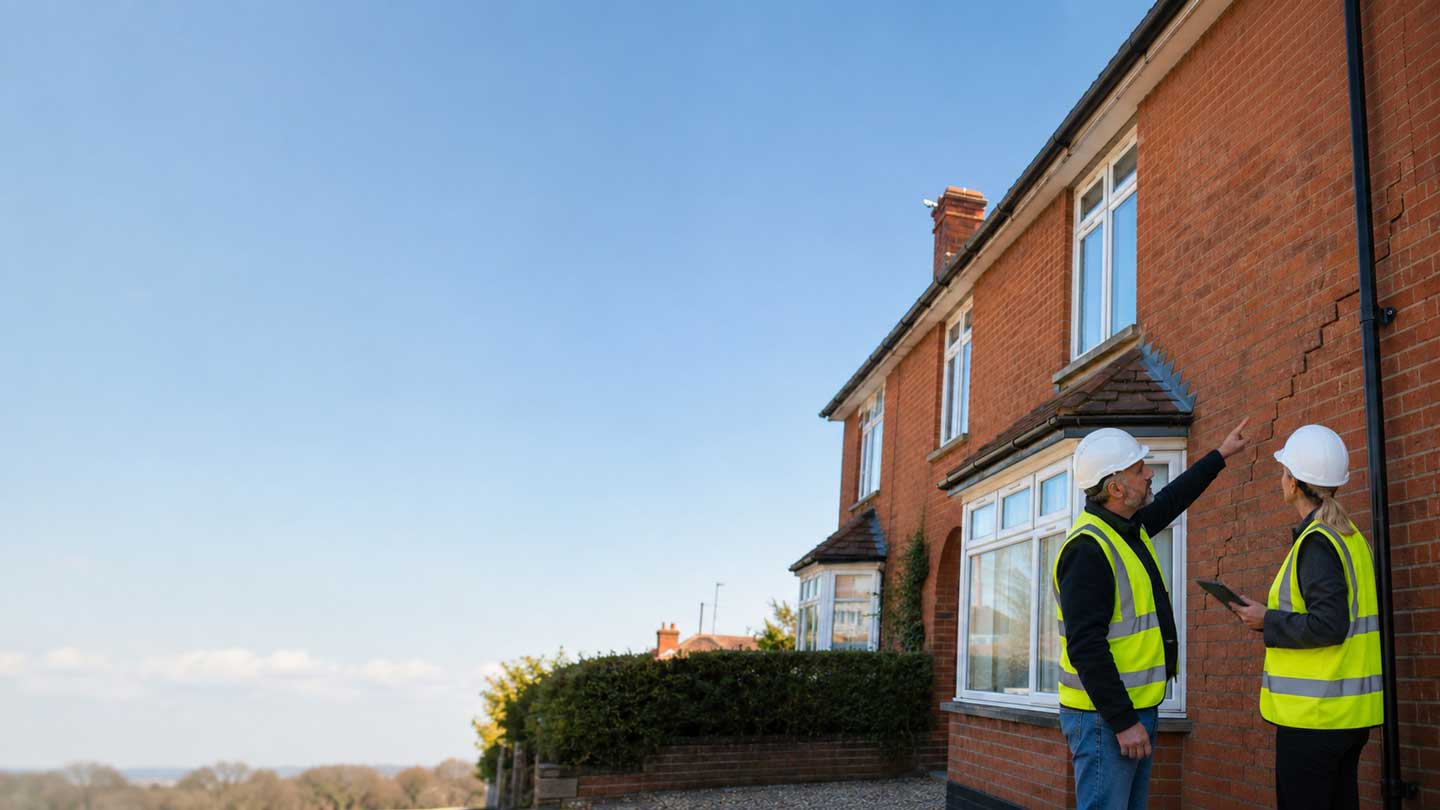
Not every crack means subsidence
Cracks in walls are common and many have nothing to do with subsidence. Buildings move slightly over time, plaster can shrink, temperature changes can affect materials, and older cracks may remain visible long after movement has stopped.
The important thing is to look at the overall pattern. A single fine crack may be harmless, while several related signs developing in the same part of a property may deserve closer attention.
New movement, worsening cracks and distortion around doors and windows are generally more significant than old, unchanged damage.
Cracks that may be more significant
Cracking is one of the most obvious signs people associate with subsidence, but the shape and position of the crack can matter.
Signs worth looking at include:
- New cracks appearing in walls or ceilings.
- Existing cracks becoming wider or longer.
- Diagonal cracks running from the corners of doors or windows.
- Stepped cracks following mortar joints in brickwork.
- Cracks that are noticeably wider at one end.
- Cracks that repeatedly reopen after being filled.
- Cracking visible inside and outside in roughly the same area.
The presence of one of these does not prove subsidence. What matters is whether the cracking appears to be caused by movement in the structure and whether that movement is continuing.
Doors and windows beginning to stick
Subsidence can cause parts of a building to move slightly out of shape. When this happens, door and window openings may become distorted.
You may notice a door that previously opened normally beginning to catch against the frame, or a window becoming noticeably harder to open or close.
Gaps may also appear around frames, or the opening may no longer look completely square.
Sticking doors and windows can have many other causes, including swelling, worn hinges or ordinary movement in the building. They become more relevant when they appear alongside new cracking or other signs of structural movement.
Movement in floors, walls and extensions
Subsidence can sometimes cause changes elsewhere in the building.
Floors may begin to slope or feel uneven. Skirting boards can separate slightly from the floor or wall. Cracks may appear where walls meet ceilings, or where one part of a building joins another.
Extensions are worth looking at carefully because movement can sometimes show where an extension joins the original property. A vertical or diagonal crack at this junction does not automatically mean subsidence, but new or worsening movement should be investigated.
Outside, you may also see displaced brickwork, cracking around openings or movement concentrated in one particular corner or section of the building.
Signs that movement may still be active
Whether the problem is changing is often just as important as what the damage looks like.
A crack that has looked exactly the same for many years may be less concerning than one that has appeared recently and continues to widen.
If you are unsure, take clear photographs and note the date. You can also measure the width of a crack at the same points and compare it over time.
Other warning signs include several new symptoms developing together, repeated cracking after decoration, or increasing distortion of doors and windows in the same part of the property.
If movement appears to be continuing, the next step should be to establish what is causing it rather than simply filling the visible cracks.
What should you do if you notice these signs?
Do not assume the worst, but do not ignore significant or changing movement either.
Start by looking at where the damage is, whether it is new, whether it is getting worse and whether there are other related signs nearby.
Possible causes can include leaking drains, shrinkable clay soil, trees, changes in ground conditions or foundation problems. The correct repair depends on the cause, so investigation should come before repair work.
If you are concerned, you can use the Subsidence Check Tool to help you consider the signs you are seeing and decide what your next step might be.
Where cracking is substantial, worsening or accompanied by other signs of movement, consider seeking advice from an appropriately qualified structural engineer or surveyor.